




For seniors, food is often a key part of their well-being and daily happiness. However, with so many details to consider when comparing assisted living communities, sometimes families might unintentionally overlook the dining experience until their loved one is already living there.
Choosing the right community for an aging loved one is a significant decision that carries both heartfelt and practical considerations. During the touring process, it’s normal to want to focus on what feels most urgent — apartment options, community features, or scheduled activities.
However, every community has its own approach to meals. And without asking the right questions, it can be difficult to see those differences when evaluating potential communities.
To help guide you on your search, we’ve put together seven important things to look for in an assisted living dining program, along with helpful questions you can ask during your tour.
The Dining Checklist: Questions to Ask During Your Tour
Often, the best way to find out whether an assisted living community feels truly right for a loved one is to tour it together. Doing so provides an excellent opportunity to see firsthand what daily life is like, sample the food, and meet the residents and employees who help make the community feel like home.
To help you get the most from your tour, here are some important questions you might consider asking about meals in assisted living:
Are Meals Prepared by Professional Chefs or General Food Service Employees?
Seniors and their loved ones often ask, “What is food like in assisted living?” The quality of the dining experience significantly depends on who actually prepares the food — and it’s something many families don’t always think about when evaluating dining programs in assisted living.
Chefs often bring culinary talent, attention to detail, and a genuine love for making every meal special. Flavorful, appealing chef-prepared meals in senior living can make it easier for residents, particularly those with a reduced appetite, to enjoy their meals.
A good community should be able to tell you who leads the kitchen, the licensing and certification they’ve received, and their experience catering specifically to senior diets.
At StoryPoint Group communities in Memphis, Chef Chris Gribble and his team bring years of culinary training to the kitchen. Whether softening textures for easier chewing, reworking a favorite recipe to fit a special diet, or adding small presentation touches to encourage appetite, Chef Chris shares that their goal is simple: to meet seniors right where they are.

How Often Does the Menu Change, and Who Drives Those Changes?
If the menu stays the same month after month, it’s worth asking a few more questions. The best dining programs regularly refresh their menus based on what residents enjoy. Find out whether the community has a clear process for gathering resident feedback — through surveys, resident councils, or conversations with chefs — and whether they consistently act on it. This helps you get a sense of what to expect from dining in senior living and whether residents truly have a voice in what’s served.
How Are Dietary Restrictions and Medical Needs Handled?
Sometimes, doctors or dietitians may recommend a specific diet due to a health condition or age-related changes. Because of this, it’s essential to ask whether meals in assisted living can accommodate any allergies, feeding limitations, or dietary restrictions your loved one may have.
Depending on your family member’s unique needs, you may want to ask about specific dietary accommodations, such as allergy-safe preparation, diabetic-friendly options, low-sodium meals, or softened meals for easier chewing. It’s also helpful to find out how nutritional needs are communicated to the kitchen and how the community ensures those accommodations are followed each day.
Over the years, our Memphis Regional Executive Chef, Chef Vincent Jones, has learned that taking the time to get to know each resident — their preferences, stories, and favorite dishes — is what brings heart to every dining experience.
What Does the Dining Room Experience Actually Feel Like? Restaurant vs. Buffet
Isolation can pose serious physical and emotional health risks, especially for seniors. A thoughtfully designed dining experience gives residents the chance to enjoy meals together, providing natural opportunities to socialize and connect. These daily interactions can help reduce feelings of loneliness and isolation.
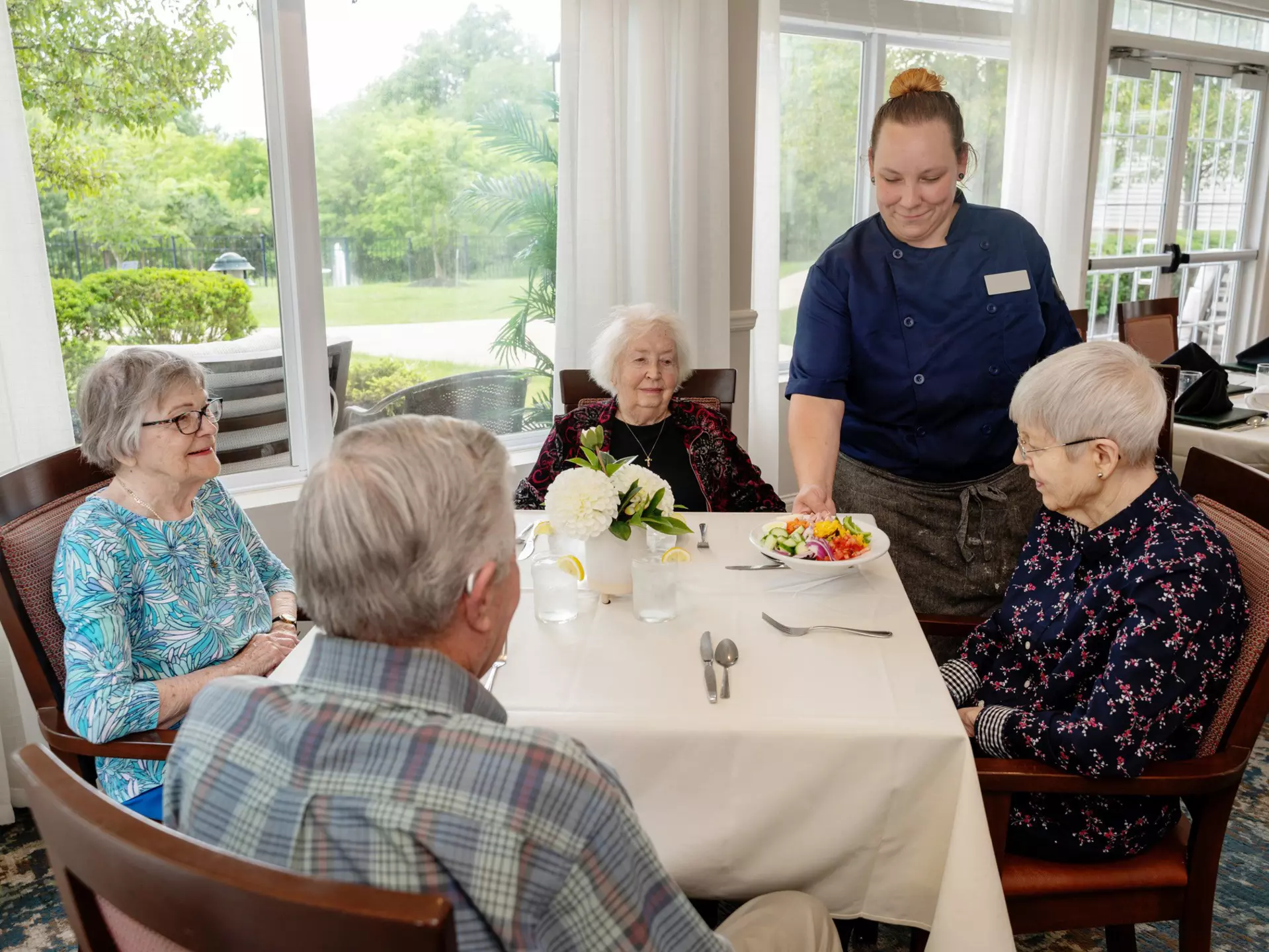
Visiting during mealtime can give you a better sense of what a community’s dining experience is really like. During your visit, look for touches that make meals feel special, like a restaurant-style experience with a welcoming atmosphere, well-set tables, and flexible, unhurried mealtimes.
During your tour, observe how residents interact: Are they engaged and chatting with one another? Do they seem rushed to finish their meals? Does the space feel inviting? Is there a sense of occasion, or do mealtimes feel like just another task? These small details can tell you a lot about what daily life might feel like for your loved one.
Are There Special Dining Events, Cooking Demos, or Culinary Programming?
The best assisted living communities make food a shared cultural experience rather than a routine task. Food-focused experiences, including themed dinners, seasonal celebrations, live cooking demos, and chef-led tastings, can demonstrate that a community values dining as part of residents’ everyday enjoyment.
That said, it’s a good idea to look for a community that can share specific dining events they have coming up, instead of just saying “we host special meals occasionally.”

Can You Review Recent Menus Before or During Your Tour?
In most cases, a community that values their dining experience will readily share examples of what residents recently enjoyed. While not the whole story, reviewing a recent menu can tell you a lot about how well the community accommodates different tastes and needs.
Request a whole week of actual menus rather than just a sample menu made for tours. Check for variety and balance, special dietary accommodations, or the use of seasonal and fresh ingredients. A menu that looks genuinely appealing to you can be a good sign.
Can You Eat There Before You Commit?
Not many families think to do this, but many senior living communities are happy to let you experience a meal firsthand. If a community is hesitant to let you try a meal during your tour, it’s worth paying attention.
Joining residents for a meal lets you and your loved one experience the dining program firsthand, including the quality of the food, the service, the ambiance, and the community’s social culture.
For families exploring assisted living in the Memphis area, we warmly invite you to share a meal with us by scheduling a tour at StoryPoint Germantown, StoryPoint Cordova, or StoryPoint Collierville.
Experience Dining at StoryPoint Group Communities
The food in assisted living and memory care can play a significant role in your family member’s comfort and happiness. Often, experiencing mealtimes firsthand is the best way to see that a community truly cares about both the quality of food and the well-being of its residents.
At StoryPoint Group communities, we consider it an honor to support seniors and their loved ones. It’s for this reason that we offer a wide variety of chef-prepared meals made from fresh, locally sourced ingredients, giving residents the energy and nourishment they need to enjoy each day to the fullest.
Connection and a genuine sense of belonging matter just as much as the food we serve. From sharing our restaurant-style dining experience to a casual chat with friends or the caring attention of our chefs checking in, it’s these little moments that make mealtime something residents look forward to every day.
To experience life at StoryPoint Group communities, we invite you to schedule a tour at StoryPoint Germantown, StoryPoint Cordova, or StoryPoint Collierville and enjoy a meal with us. We can’t wait to welcome you and your loved one.