




A home represents years of hard work and financial commitment. It might even be your largest asset. But as life changes, it’s completely natural to rethink our housing and financial choices. You might choose to downsize to a smaller home, move to a senior living community, or use your home’s equity to free up some cash.
One option you may want to explore as a homeowner is a reverse mortgage. This type of loan allows you to borrow against your home’s equity while continuing to live in it. In return, you receive payments that you can use for everyday expenses, health care costs, or other needs.
For many people, this can seem like a simple way to access extra cash. However, reverse mortgages are not simply “free money.” They are financial products with specific eligibility requirements, costs, and long-term implications that deserve careful consideration.
In this guide, we’ll cover the basics of reverse mortgages for seniors, including Home Equity Conversion Mortgage (HECM) loans and proprietary reverse mortgage options. We’ll also discuss the potential benefits and risks and explore common alternatives available to seniors, including a Home Equity Line of Credit (HELOC) and downsizing.
What Is a Reverse Mortgage and How Does It Work?
A reverse mortgage is a type of loan that allows homeowners to borrow against their home’s equity without making monthly loan payments. Instead of paying the lender each month, the lender pays you.
Reverse mortgages offer several ways to receive your funds based on your financial needs and preferences. These can include:
- Lump Sum: With this option, you can receive the full available loan amount at closing. It may be useful if you need a larger upfront amount to pay off an existing mortgage, cover major medical expenses, or complete significant home repairs.
- Line of Credit: A line of credit allows you to withdraw funds as needed rather than taking everything at once.
- Monthly Payments: Some borrowers choose monthly payments instead of a large upfront amount. These payments may be structured as:
- Tenure payments, which continue for as long as you live in the home as your primary residence
- Term payments, which are paid over a fixed period you select
Throughout the loan, you retain ownership and remain on the title of the home. However, it’s important to understand that interest and fees are added to the loan balance each month. Over time, this causes the amount you owe to grow while your remaining home equity decreases.
A reverse mortgage usually becomes due when the last borrower passes away, sells the home, moves out permanently, or fails to meet required obligations like paying property taxes and maintaining homeowners’ insurance. In such cases, repayment is typically expected within a set period.
HECM vs. Proprietary Reverse Mortgages: Understanding Your Options
A Home Equity Conversion Mortgage (HECM) is the only federally insured reverse mortgage. It’s backed by the Federal Housing Administration (FHA) and regulated by the U.S. Department of Housing and Urban Development (HUD), providing standardized protections for both borrowers and lenders.
In 2026, typical HECM interest rates are generally in the low-to-mid-6% range, which may be lower than those for many other reverse mortgage options. However, these loans aren’t available everywhere and may come with stricter eligibility requirements, including being 62 or older, owning a home, and living in it as your primary residence. The current HECM lending limit for 2026 is $1,249,125, meaning that if your home is worth more than this, only $1,249,125 is considered when calculating your loan.
Proprietary reverse mortgages, also called jumbo reverse mortgages, work differently. They are not FHA-insured, but they allow higher loan amounts, sometimes up to $4 million, making them a good option for homeowners with high-value properties that exceed HECM limits. They often don’t require FHA mortgage insurance, and some lenders offer them to borrowers as young as 55.
With a Home Equity Conversion Mortgage, borrowers may benefit from federal protections and special rules that safeguard non-borrowing spouses. Proprietary reverse mortgages, on the other hand, often have lender-specific terms. As such, it’s important to fully understand the lender’s terms and conditions before signing.
In addition to these options, some federal or local programs offer single-purpose reverse mortgages for seniors with lower incomes. These low-cost loans are typically designed for specific uses, like home repairs or property taxes. Availability may vary depending on where you live, so it’s worth checking which programs are available in your area.

Reverse Mortgage Eligibility: Requirements You Must Meet
To qualify for a reverse mortgage, seniors typically must meet requirements established by the Department of Housing and Urban Development (HUD) for Home Equity Conversion Mortgages (HECMs) or by private lenders for proprietary reverse mortgage loans. These may include:
- Age Requirement: To be eligible for a Home Equity Conversion Mortgage (HECM), you must be 62 or older. However, certain proprietary reverse mortgages may accept borrowers as young as 55, with payouts based on the youngest borrower’s age.
- Home Ownership: Borrowers may need to have substantial equity, meaning either owning the home outright or having a low remaining mortgage balance that can be paid off at closing.
- Primary Residence: The property must be the home you live in most of the year. Vacation homes and rental properties are generally not eligible.
- Property Types: Eligible properties may include single-family homes, FHA-approved condos, manufactured homes that meet FHA standards, and 2-4 unit properties where you occupy one unit.
- Financial Assessment: Some lenders may assess your ability to meet ongoing obligations, including property taxes, homeowners’ insurance, and home maintenance.
- No Federal Debt: Borrowers must typically be current on federal obligations like taxes and student loan payments. In some cases, reverse mortgage funds can be used to settle these debts.
- Counseling Requirement: For FHA Home Equity Conversion Mortgages (HECM), you must complete a session with a HUD-approved counselor before your loan gets approved. This helps ensure you clearly understand the loan’s terms and available alternatives.
- Home Condition: FHA-insured homes must meet Minimum Property Standards. In some situations, borrowers may be required to complete necessary repairs before closing.

The Pros of Reverse Mortgages for Seniors
If you’re considering a reverse mortgage for seniors, there are lots of remarkable benefits worth knowing about, including:
- No Monthly Mortgage Payments: A reverse mortgage can help free up tax-free cash for everyday expenses or other needs. However, as the homeowner, you’ll still be responsible for property taxes, insurance, and maintenance costs.
- Aging in Place: Many aging adults cherish the warmth and comfort their home provides, while others simply aren’t ready to move. A reverse mortgage for seniors allows these individuals to tap into their home equity without selling or relocating. Some of them use these funds to make important aging-in-place modifications, like installing a walk-in shower, adding a ramp for easier access, or widening the doorways for wheelchair accessibility.
- Flexible Payment Options: Borrowers may choose from several payment options, including lump-sum payments, a line of credit, or monthly payments, depending on what works best for them.
- Tax-Free Proceeds: Funds from a reverse mortgage are typically considered loan advances, not income. Therefore, they are not subject to income tax in most cases.
- Non-Recourse Protection: Borrowers and their heirs are never responsible for more than the home’s value when it’s sold, even if the loan balance exceeds the home’s worth.
- Social Security and Medicare Remain Unaffected: Reverse mortgage funds usually do not affect Social Security or Medicare benefits. In some cases, however, they may influence Medicaid or Supplemental Security Income (SSI).
- Growing Line of Credit: With a HECM, any unused portion of your line of credit can grow over time, potentially giving you access to more funds in later years.
- You May Purchase a New Home: Some reverse mortgage arrangements allow seniors to use proceeds to buy a new primary residence. This can be especially helpful for those looking to downsize or move to a home that better fits their needs.
The Cons and Risks of Reverse Mortgages
Many people often wonder, “Is a reverse mortgage a good idea?” While reverse mortgages for seniors can offer several appealing benefits, there are also potential risks and drawbacks worth keeping in mind, including:
- High Upfront Costs: Borrowers may face origination fees of up to $6,000, a 2% FHA mortgage insurance premium, and closing costs, totalling several thousand dollars.
- Growing Loan Balance: Interest compounds monthly, meaning the loan balance can increase significantly over time while your home equity decreases.
- Reduced Inheritance: With a reverse mortgage, less equity may be available for heirs, who usually need to repay the loan, often by selling the home.
- Ongoing Obligations: Failing to pay property taxes, maintain homeowners’ insurance, or complete necessary home repairs can lead to default and even foreclosure.
- Impact on Needs-Based Benefits: In some cases, unspent reverse mortgage funds may affect eligibility for Medicaid, Supplemental Security Income (SSI), or other needs-based programs.
- Loan Becomes Due If You Move: If you move into assisted living, a nursing home, or live with family for 12 months or more, the loan typically becomes due.
- Complex Contracts: Reverse mortgages can involve long, complex contracts, which can be difficult for some seniors to understand.
- Potential for Scams: Many older adults may be vulnerable to fraudulent reverse mortgage offers or pressure to spend on unnecessary products or services.
- Not Ideal for a Near-Term Move: If you plan to move within a few years, the high costs may outweigh the benefits of a reverse mortgage.

Understanding Reverse Mortgage Costs and Fees
Many seniors often search for “how much does a reverse mortgage cost?” The answer can vary depending on whether it’s a HECM (FHA-insured) loan or a proprietary reverse mortgage, as well as other factors like home value, loan amount, and borrower age. Here’s a detailed breakdown of typical reverse mortgage fees:
- Origination Fee: Lenders can charge up to 2% of the first $200,000 of your home’s value and 1% of any amount above that, up to a $6,000 maximum.
- High Insurance Premiums: For FHA-insured loans, the initial mortgage insurance premium (MIP) equals 2% of the home value or the HECM lending limit — whichever is less.
- Ongoing Mortgage Insurance: HECM borrowers may be required to pay an annual mortgage insurance fee of 0.5% of their current loan balance.
- Closing Costs: Typical closing expenses, including appraisal, title insurance, recording fees, and credit checks, often total $1,000-$2,000 or more. Appraisal fees alone may range from $400-$700 in certain situations.
- Counseling Fee: HUD-approved counseling usually costs between $125 and $200, though the fee can be waived for seniors who cannot afford it.
- Interest Rates: Current rates typically range from mid-5% to over 8%, depending on loan type and market conditions, and accrue monthly on the balance.
- Servicing Fees: Some lenders charge monthly servicing fees, usually $25-$35, which are added to the loan balance.
- Most Costs Can Be Financed: Many of these costs can be rolled into the loan to help you avoid out-of-pocket expenses, though they will increase your overall loan balance.
Reverse Mortgage vs. Home Equity Loan vs. HELOC: Comparing Your Options
Home equity loans typically come as a one-time payment with a fixed interest rate and fixed monthly installments. To qualify, borrowers usually need to have around 20% equity in the home and a good credit score, typically 620 or higher.
A Home Equity Line of Credit (HELOC) allows homeowners to borrow against their home’s equity at variable interest rates, with the property serving as collateral. It functions much like a credit card, letting you borrow as needed up to a set limit.
Unlike reverse mortgages for seniors, home equity loans and HELOCs require borrowers to make monthly payments. Reverse mortgages are generally available only to homeowners aged 62 or older. Home equity loans and HELOCs, on the other hand, may be accessible to younger homeowners who have sufficient equity and income.
In most cases, home equity loans and HELOCs also require minimum income and credit score requirements, while reverse mortgages typically only require a financial assessment.
Current interest rates for HELOCs hover around 8%, with home equity loans usually a little lower. Reverse mortgages offer comparable rates, but the interest is added to the loan balance rather than paid monthly.
Many seniors find it helpful to think of these options this way: use a reverse mortgage when you need cash without monthly payments, a HELOC for short-term borrowing you can repay, and a home equity loan for significant one-time expenses.
Over the long term, home equity loans and HELOCs can help seniors rebuild equity through monthly repayments. Reverse mortgages, on the other hand, often reduce home equity as interest and fees accumulate.
Alternatives to a Reverse Mortgage: Other Ways to Access Home Equity
While a reverse mortgage for seniors may be a great financial tool for some, it may not work for everybody. Fortunately, many alternatives offer seniors other ways to access their home equity without selling or moving. These can include:
- Downsizing: Some seniors may choose to downsize from their current home to a smaller or less expensive one and use the difference to pay for retirement costs.
- Cash-Out Refinance: You could swap your existing mortgage for a larger one and access the difference in cash, provided you can handle the monthly payments.
- Home Equity Sharing Agreements: These arrangements allow you to exchange a portion of your home’s future appreciation for immediate cash without monthly payments.
- Renting Out Rooms: Seniors may generate extra income by renting out extra bedrooms or a separate suite while remaining in their home.
- Sale-Leaseback: In some cases, you can access the full value of your home by selling it to an investor and leasing it back to keep it as your residence.
- State and Local Assistance Programs: Check if you qualify for state or local programs for tax relief, home repairs, or utilities that can help you preserve your home equity.
- Medicaid Planning: For those who may need Medicaid, an elder law attorney can help you explore more suitable options than a reverse mortgage.
- Transitioning to Senior Living: In some cases, moving to a senior living community may free older adults from the hassles of home maintenance and, in the long run, keep living costs more affordable.
Who Should Consider a Reverse Mortgage?
You might ask, “Who should get a reverse mortgage?” or, “Is a reverse mortgage right for me?” The answer depends.
Generally speaking, a reverse mortgage is usually a sensible option for someone who:
- Has substantial home equity
- Plans to stay in their home long-term
- Needs extra income
- Can cover property taxes and insurance
- Doesn’t intend to leave the home to heirs
A reverse mortgage for seniors may also be a helpful option for those with limited income who might not qualify for or afford monthly payments on traditional home equity loans or lines of credit. Homeowners with high-value properties might benefit from a jumbo reverse mortgage, which generally offers higher loan limits, sometimes up to $4 million.
Because repayment timelines are usually shorter, older homeowners might benefit from more favorable conditions with reduced long-term cost buildup from interest and fees.

Who Should Avoid a Reverse Mortgage?
While deciding whether a reverse mortgage is right for you is a very personal choice, there are situations in which the risks and drawbacks may outweigh the benefits. These may include:
- Plan to Move Soon: Reverse mortgages may not be ideal if you expect to relocate within the next few years, since the high upfront costs can outweigh the benefits.
- Want to Leave Your Home to Heirs: A reverse mortgage can affect estate planning. In most cases, heirs must repay the loan first, often by selling the home or paying off the balance, to keep the property.
- Can’t Afford Property Charges: Reverse mortgage borrowers must still cover taxes, insurance, and home upkeep. Failing to do so may lead to loan default and potential foreclosure.
- Have Other Affordable Options: If you qualify and can afford a HELOC or home equity loan, these options often cost less than a reverse mortgage.
- Need for Medicaid Planning: Proceeds from a reverse mortgage could affect your Medicaid eligibility. For this reason, it’s generally wise to consult an elder law attorney before moving forward.
- Single Borrower With a Younger Non-Borrowing Spouse: If your spouse is under 62, they typically cannot be included on a Home Equity Conversion Mortgage (HECM). This can potentially affect the younger spouse’s ability to remain in the home if the borrowing spouse passes away.
- Home Requires Significant Repairs: If major repairs are needed, lenders may require them to be completed before closing. In some cases, these costs could reduce the funds available from the reverse mortgage by a substantial amount.
- Considering Assisted Living Soon: If you plan to move into an assisted living community or another living situation for 12 months or more, the reverse mortgage typically needs to be repaid then.
How to Protect Yourself When Considering a Reverse Mortgage
For many seniors, a reverse mortgage is a significant life decision. If you’re considering this option, here are some helpful tips to help you protect yourself along the way:
- Complete HUD-Approved Counseling: This is required for HECM loans. But even for proprietary reverse mortgages, it might help you fully understand the terms, costs, and alternatives.
- Compare Multiple Lenders: Rates, fees, and loan terms can vary widely. It’s usually a good idea to obtain quotes from at least three different lenders before making a decision.
- Involve Loved Ones: Since reverse mortgages can influence estate plans, it’s usually a good idea to discuss the decision with adult children and trusted advisors.
- Beware of Scams: Only sign contracts you fully understand. You might also want to avoid contractors who push reverse mortgages for home repairs or try to use high-pressure sales tactics on you.
- Review Paperwork Thoroughly: Make sure you fully understand the interest rates, fees, loan terms, and your obligations before signing.
- Talk to Trusted Experts: Before proceeding, consider seeking guidance from a financial advisor, an elder law attorney, or a HUD-approved counsellor.
- Don’t Hurry: Take your time. Reverse mortgages for seniors typically give you up to three days to cancel if you change your mind after closing.
Making an Informed Decision About Reverse Mortgages
In certain situations, reverse mortgages can provide valuable financial flexibility for senior homeowners. Still, a reverse mortgage is a complex decision that carries significant long-term implications, so you’ll want to consider it carefully.
Before deciding on a reverse mortgage, take your time to explore other, often more affordable options, including downsizing, opening a HELOC, or moving to a senior living community.
If you feel unsure about your options, a HUD-approved counselor, or financial and legal experts can help guide you through your home equity retirement planning. Lastly, because these reverse mortgages may affect both you and your heirs, it’s often best to keep your loved ones involved.
Senior Living With StoryPoint Group
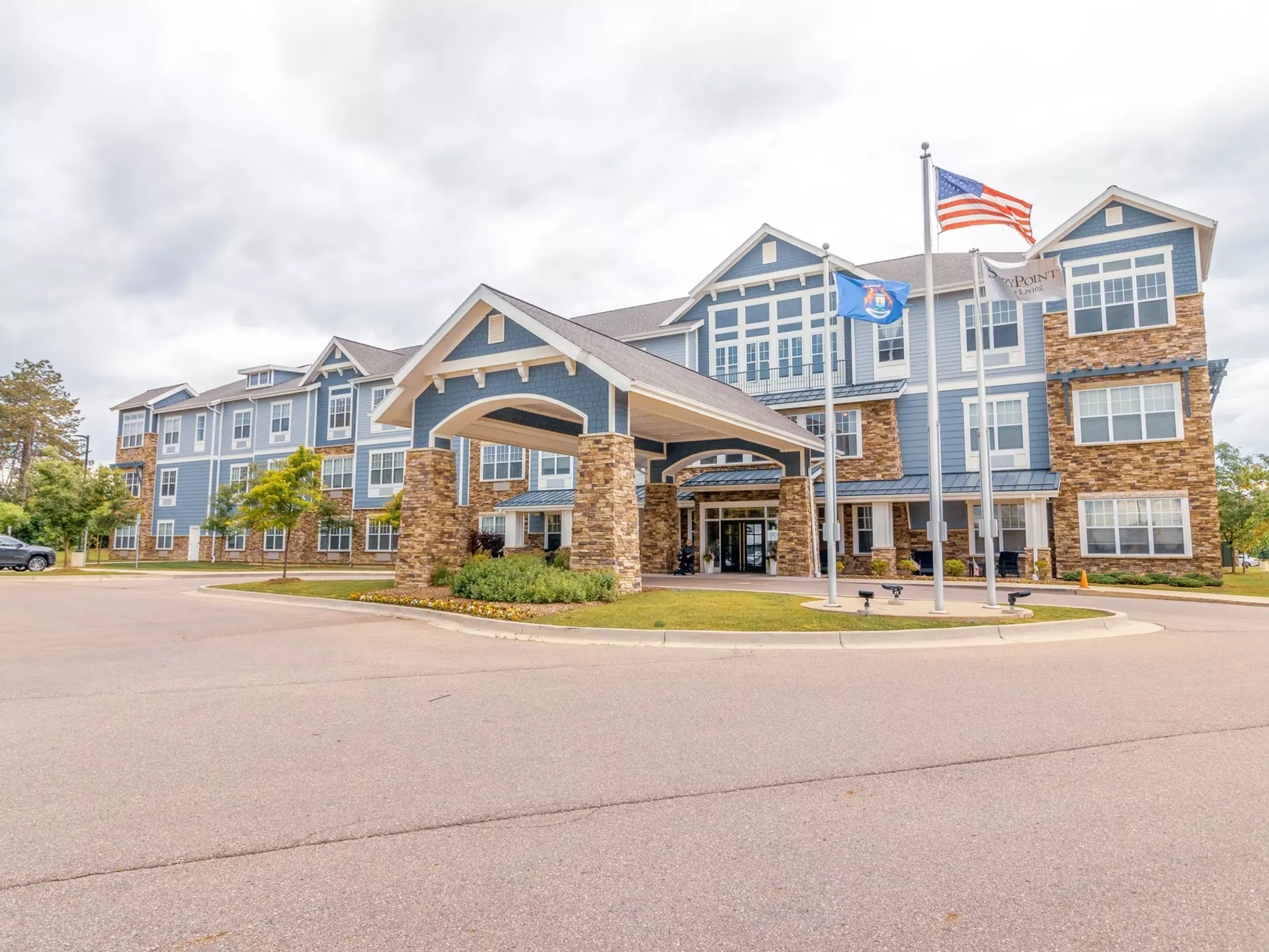
At StoryPoint Group communities, we’re deeply passionate about helping our residents make the most of each day in ways that matter most to them. If you or a loved one needs a new place to call home, we’re here to help.
To experience what it’s like to live with us, please fill out our contact form or schedule a tour of the StoryPoint Group community nearest you. We’d love to get to know you.